
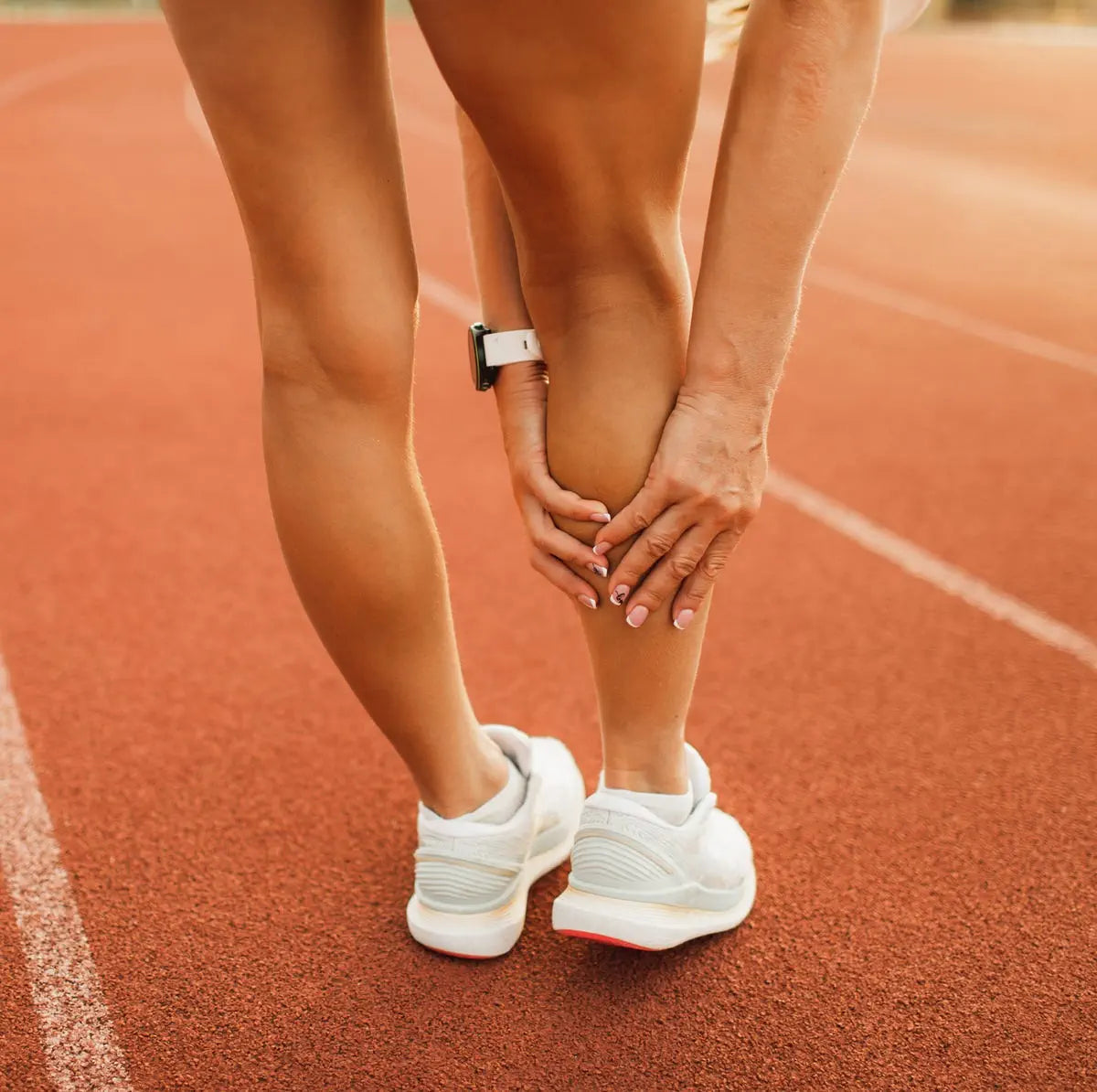
Do electrolytes prevent cramps even when you're drinking enough water?
Yes. Cramps occur despite drinking water because sweat removes sodium, potassium, magnesium, and calcium—electrolytes essential for muscle control. Water alone often cannot restore fluid balance when electrolytes are lost through sweat. Effective hydration requires replacing electrolytes at sweat-loss levels, not trace amounts, to maintain normal nerve and muscle function.
TL;DR
- If you’re cramping despite drinking water, it’s usually because you’re losing electrolytes faster than you’re replacing them.
- Muscle control depends on sodium, potassium, magnesium and calcium — not fluid alone. When sweat dilutes these minerals, nerves misfire and muscles struggle to relax.
- Replacing electrolytes at sweat-loss levels helps reduce cramp risk during heavy sweating, heat and long efforts.
Why Cramping Happens Even When You're Hydrated
Here's the thing about muscle cramps: they're usually not just a hydration problem—they're an electrolyte problem.
Muscle fatigue and cramping sit on the same spectrum — fatigue is the early warning sign that neuromuscular control and electrolyte balance are being strained.
Exercise-associated muscle cramps (EAMC) are those sudden, painful spasms that lock up your calves, quads, or hamstrings during or after hard effort. You've drunk plenty of water. You've trained well. But the cramp still hits.
That's because cramps aren't primarily about fluid volume—they're about electrical control. Your muscles fire and relax based on electrolyte-driven signals between nerves and muscle cells. When those electrolytes drop below critical levels, the system misfires. Muscles contract but struggle to release.
Let's break down exactly what's happening—and why replacing electrolytes properly makes the difference between cramping and not cramping.

How Muscle Cramps Actually Work (It's Neural, Not Muscular)
What's happening during a cramp:
The same loss of neural control that leads to cramps also shows up earlier as muscle fatigue — reduced force, slower firing and poor coordination.
Exercise-associated muscle cramps occur when fatigued muscles overwhelm the nervous system's ability to balance contraction and relaxation signals. As muscles tire, excitatory nerve signals overpower inhibitory ones—the "on switch" keeps firing while the "off switch" fails.
The result? Sustained, involuntary contractions that won't release until the nervous system regains control.
Research shows: Cramping isn't caused by tight muscles or dehydration alone—it's caused by altered neuromuscular control under fatigue. Studies demonstrate that cramp threshold (the point at which muscles involuntarily contract) drops significantly when electrolytes are depleted, even if total body water is adequate.
This is why well-conditioned athletes still cramp during long events or in heat—conditioning raises your fatigue tolerance, but it doesn't prevent electrolyte depletion.
Why Water Alone Makes Cramping Worse
Most people assume: more water = less cramping.
The reality is more complex.
When you sweat heavily and replace only water, you dilute the electrolytes still in your bloodstream. This makes nerve and muscle cells more electrically unstable—not less.
Research shows: Water intake after dehydration makes muscles more susceptible to cramp, but electrolytes reverse that effect. In lab studies, participants who drank plain water post-exercise cramped sooner under electrical stimulation than those who consumed nothing. Those who drank electrolyte solutions showed significantly longer time-to-cramp.
Fluid balance can’t be restored without replacing the electrolytes lost in sweat.
What Your Body Actually Loses in Sweat
Sweat isn't just water—it's a complex mix of minerals that control how your nerves and muscles communicate.
Most people lose 800-1200mg of sodium per liter of sweat, plus meaningful amounts of potassium, magnesium, and calcium—not just trace amounts.
Here's what each electrolyte does for muscle control:
Sodium: The Signal Starter
Sodium powers the nerve impulses that tell muscles to fire. Heavy sweaters can lose over 1 gram (1000mg) per liter. When sodium drops, nerve signals become erratic—muscles fire unpredictably and struggle to reset.
Potassium: The Reset Switch
Potassium allows muscle cells to return to their resting state after contraction. It's the "off switch." Low potassium means muscles contract normally but can't fully relax—creating the conditions for sustained cramping.
Magnesium: The Neural Stabilizer
Magnesium calms overactive nerve pathways and supports the energy production needed for muscle relaxation. Depletion makes nerves hyper-excitable.
Calcium: The Contraction Trigger
Calcium triggers muscle contractions, but only when balanced with magnesium. Too little calcium relative to other electrolytes disrupts the contraction-relaxation cycle.
Why Most Hydration Products Fall Short During High Sweat Loss
The commercial gap:
Most commercial hydration products replace only 50-60% of sodium lost in sweat and contain minimal amounts of other essential electrolytes. They often provide 400-600mg sodium per liter—replacing roughly half of what you're losing if you're sweating heavily.
Potassium? Usually minimal amounts per liter (often around 20% of sweat losses).
Magnesium and calcium? Often negligible or absent entirely.
This partial replacement works for:
- Light activity under 60 minutes
- Mild sweating in cool conditions
- People with naturally low sweat rates
It fails during:
- Endurance efforts over 90 minutes
- High-intensity training in heat
- Work shifts in hot environments
- Any scenario where you soak through clothing
Optimal hydration requires replacing all major electrolytes lost in sweat—sodium, potassium, magnesium, and calcium—not just sodium alone.
When You're Most Likely to Cramp (And Why Electrolytes Matter More)
Cramping risk increases when:
1. You're working or training in heat for extended periods
Higher sweat rates = faster electrolyte depletion. Even well-conditioned athletes cramp when losses outpace replacement.
2. You change pace suddenly after sustained effort
Fatigued muscles already operating near their control threshold can't handle rapid firing changes when electrolytes are low.
3. You're following low-carb or fasting protocols
Ketogenic diets and fasting accelerate sodium and potassium losses. Your kidneys excrete more electrolytes when insulin is low.
4. You've only consumed water during long sessions
Progressive dilution of electrolytes makes muscles increasingly unstable as the session continues.
5. You have a history of cramping in specific conditions
If you cramp predictably (e.g., always in the third set, always on hot days), you've likely identified your personal electrolyte depletion threshold.
Prevention Versus Treatment: Different Strategies for Different Situations
Prevention (What Works During Activity)
Consistent electrolyte intake during high-sweat conditions preserves nerve-muscle control.
Research demonstrates:
- Participants who consumed electrolyte drinks during exercise showed significantly longer time-to-cramp versus water alone
- Cramp threshold remained stable with electrolyte replacement but dropped with water-only hydration
- The protective effect required adequate sodium plus supporting electrolytes
- Improved electrolyte replacement delays fatigue by stabilising nerve firing and preserving muscle coordination, not just preventing cramps
Practical prevention approach:
- Start electrolyte intake early (don't wait until you feel symptoms)
- Aim for ~800mg+ sodium per liter of sweat estimated
- Include meaningful potassium, magnesium, and calcium
- Sip consistently throughout effort rather than drinking large amounts at once
Acute Treatment (What Works When Cramp Hits)
For immediate cramp relief, hypertonic solutions trigger rapid neural reflexes.
Pickle juice, concentrated electrolyte drinks, or even mustard packets work by activating receptors in the mouth and throat that send inhibitory signals to over-firing motor neurons (the oropharyngeal reflex). This effect is neural, not systemic—it works too fast to be about replacing depleted stores.
But this is symptom management, not correction. Once the acute cramp releases, you still need to replace the electrolytes you've lost to prevent recurrence.
What Makes Electrolyte Replacement Effective for Cramp Prevention
Effective hydration requires replacing electrolytes at sweat-loss levels, not trace amounts.
Based on sweat composition research, adequate replacement means:
-
Matching sodium at ~800mg+ per liter minimum
This prevents progressive dilution and maintains nerve signal strength -
Including meaningful potassium
Supports muscle cell reset after contraction -
Providing supporting magnesium and calcium
Stabilizes nerve excitability and supports energy production -
Without relying on sugar for absorption
Sugar is not required for electrolyte absorption—sodium and glucose work independently in fluid transport
Most sports drinks fall short of these thresholds. They add sugar (which does nothing for cramp prevention) while under-delivering the minerals that matter for muscle control.
Key Takeaways
- Effective hydration requires replacing electrolytes at sweat-loss levels, not trace amounts—water alone often cannot restore fluid balance after heavy sweat loss
- Muscle fatigue and cramps both result from altered neuromuscular control when electrolytes drop — fatigue appears first, cramps follow if imbalance continues
- Most people lose 800-1200mg sodium per liter of sweat, plus meaningful amounts of potassium, magnesium, and calcium—not just trace amounts
- Drinking water after heavy sweating dilutes remaining electrolytes and can increase cramp risk
- Prevention requires consistent replacement during activity; acute treatment uses concentrated solutions to trigger neural reflexes
Frequently Asked Questions
Q: Can you prevent cramps by just drinking more water?
A: Not usually. Water alone often cannot restore fluid balance when electrolytes are lost through sweat. Studies show water intake after dehydration makes muscles more susceptible to cramp, while electrolyte drinks reverse that effect.
Q: How much sodium do I actually need to prevent cramping?
A: Most people lose 800-1200mg sodium per liter of sweat. Effective replacement for many people in high-sweat conditions typically requires ~800mg+ per litre.
Q: Why do I cramp even when I'm well-trained?
A: Conditioning raises your fatigue tolerance but doesn't prevent electrolyte depletion. Even elite athletes cramp when sweat losses outpace electrolyte replacement, especially in heat or during long efforts.
Q: Do I need electrolytes if I'm only exercising for 30-45 minutes?
A: Probably not, unless you're sweating heavily in extreme heat. For shorter sessions in moderate conditions, water is usually sufficient. Electrolyte needs scale with sweat volume and duration.
Q: Why does pickle juice stop cramps so quickly?
A: Pickle juice triggers neural reflexes that inhibit over-firing motor neurons—it's a neural response, not electrolyte replacement. But once the acute cramp releases, you still need to replace depleted stores to prevent recurrence.
Q: Can I get enough electrolytes from food?
A: For daily baseline needs, yes. But during high-sweat activity, you lose electrolytes faster than you can replace through food. Real-time replacement during exercise typically requires liquid electrolyte solutions.
Q: Is there such a thing as too many electrolytes?
A: Healthy kidneys handle excess electrolytes efficiently. The bigger risk is under-replacement during high losses. Listen to your body—thirst, salt cravings, and cramp patterns are good indicators of your personal needs.
Conclusion
Cramping isn't always a sign you're not drinking enough water—it's often a signal that electrolyte losses have outpaced replacement. Water alone often cannot restore fluid balance when electrolytes are lost through sweat.
When you understand that muscle control depends on electrical gradients maintained by sodium, potassium, magnesium, and calcium, the solution becomes clearer: replace what you actually lose, at the levels you actually lose it.
That's not marketing—it's physiology.
References
-
Miller KC, et al. (2021). Muscle cramp? Drink electrolytes, not water, study shows. ScienceDaily, March 18, 2021.
https://www.sciencedaily.com/releases/2021/03/210318101536.htm -
Precision Hydration. (2019). New lab-based evidence that electrolytes can reduce cramping.
https://www.precisionhydration.com/performance-advice/hydration/sodium-intake-cramping-study/ -
Miller KC, et al. (2019). Water intake after dehydration makes muscles more susceptible to cramp. PMC, PMC6407543.
https://pmc.ncbi.nlm.nih.gov/articles/PMC6407543/ -
Schwellnus MP, et al. (1995). Influence of hydration and electrolyte supplementation on incidence and severity of exercise-associated muscle cramps. PMC, PMC1150229.
https://pmc.ncbi.nlm.nih.gov/articles/PMC1150229/ -
Miller KC, et al. (2019). Water intake after dehydration makes muscles more susceptible to cramp but electrolytes reverse that effect. BMJ Open Sport & Exercise Medicine, 5(1): e000478.
https://bmjopensem.bmj.com/content/5/1/e000478 -
Ross C, et al. (2021). An evidence-based review of the pathophysiology, treatment, and prevention of exercise-associated muscle cramps. PMC, PMC8775277.
https://pmc.ncbi.nlm.nih.gov/articles/PMC8775277/ -
Stanford Medicine. (2020). Electrolyte supplements don't prevent illness in athletes. February 24, 2020.
https://med.stanford.edu/news/all-news/2020/02/electrolyte-supplements-dont-prevent-illness-in-athletes.html -
Journal of Exercise and Nutrition. (2022). Magnesium supplementation and exercise-associated muscle cramps.
https://journalofexerciseandnutrition.com/index.php/JEN/article/view/126 -
PubMed. (2019). Electrolyte beverage consumption alters electrically induced muscle cramp threshold. PMID: 31350753.
https://pubmed.ncbi.nlm.nih.gov/31350753/ -
Gatorade Sports Science Institute. (2017). Exercise-Associated Muscle Cramp.
https://www.gssiweb.org/sports-science-exchange/article/exercise-associated-muscle-cramp
Share:
Electrolytes and Sport Performance