
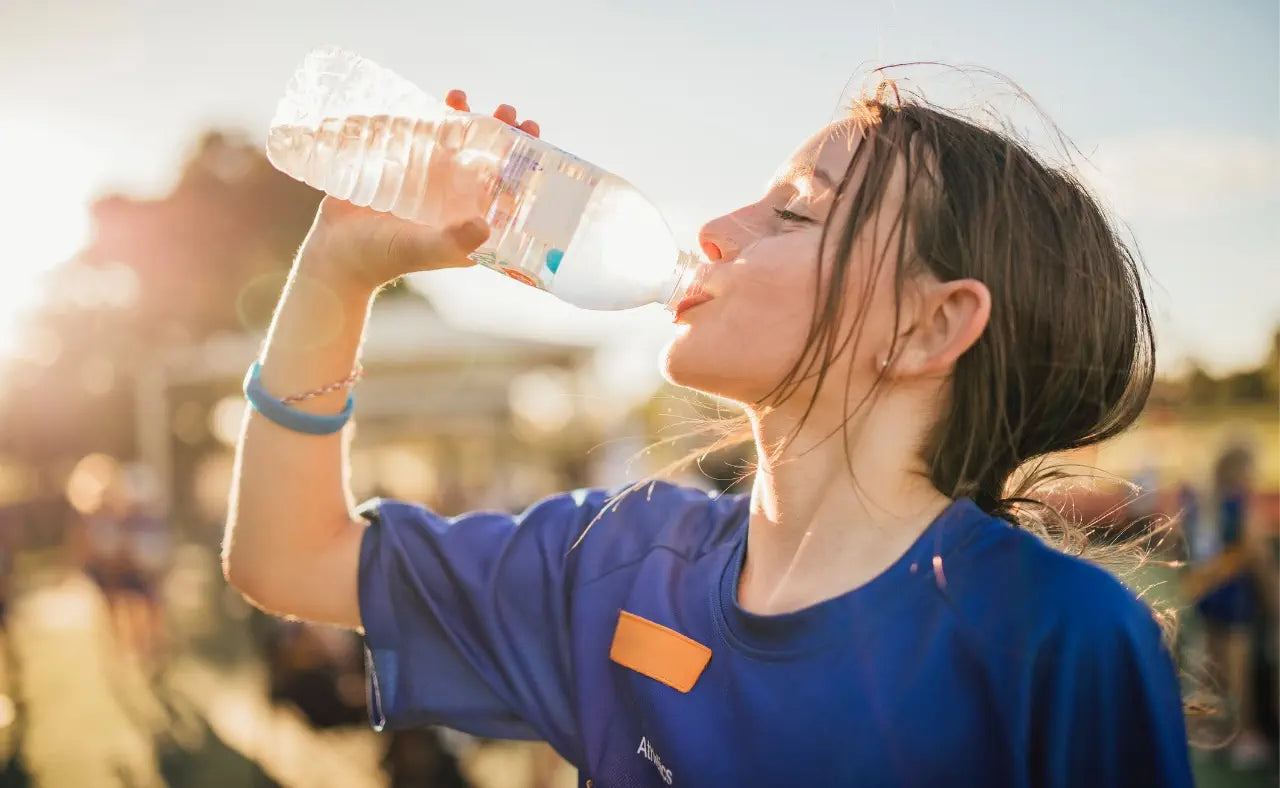
Do adolescent athletes (ages 12–18) need electrolytes during sport, and how does this differ from younger children?
Yes — electrolytes are minerals lost in sweat that allow the body to absorb and retain water effectively.
Adolescent athletes sweat at higher rates than pre-pubescent children, with sweat rates often approaching ~0.8 litres per hour and average sweat sodium concentrations commonly reported around ~800 mg per litre—similar to adults. When electrolytes are lost through sweat, water alone cannot restore fluid balance.
For sessions involving meaningful sweat loss, adolescents benefit from sugar-free electrolyte replacement (approximately ~700–900 mg sodium per litre), beginning shortly before exercise (often ~20–30 minutes) to account for normal absorption time. This approach avoids the gastric emptying delays, gastrointestinal discomfort and energy volatility commonly associated with sugary sports drinks.
TL;DR
- Adolescents sweat more than children (approximately ~0.8 L/hour) with adult-like sodium concentrations (~800 mg per litre on average)
- Water alone cannot fully restore fluid balance when electrolytes are lost through sweat
- Carbohydrate-containing solutions (including sugar) can slow gastric emptying compared with low-osmolality electrolyte solutions, delaying effective hydration in some athletes
- Beginning electrolyte intake shortly before exercise (often ~20–30 minutes) accounts for the 20–40 minute absorption window and helps prevent early deficits
- Sugar-free electrolytes (~700-900 mg sodium per litre) align more closely with sweat losses without GI distress, energy crashes or dental concerns
How Adolescent Sweat Losses Differ from Children
During adolescence, hydration physiology changes meaningfully.
Adolescents (ages 12-18) produce sweat rates approaching adult levels—approximately ~0.8 litres per hour during exercise, compared to pre-pubescent children who average around ~0.6 litres per hour. More importantly, the sodium concentration in adolescent sweat mirrors adult profiles at roughly 35 mmol/L (approximately ~800 mg/L).
Once puberty begins, total electrolyte losses increase substantially, not because sweat becomes “saltier”, but because sweat volume increases. This becomes clinically relevant when body mass losses exceed ~1–2% during activity, although declines in cognitive function and endurance have been observed at losses as low as ~1%.
For a 60 kg teen, that's just 600 mL of sweat—less than an hour of moderate-intensity sport in Australian summer heat.
Average sweat sodium losses are commonly reported around ~800 mg per litre, though individual losses vary, plus meaningful amounts of potassium, magnesium, and calcium—not just trace amounts. This is the physiological reality many teenage athletes face during training and competition.

When Water Alone Falls Short
The common guidance that electrolytes only matter after 60–90 minutes of exercise often overlooks three key physiological factors.
First: Absorption lag time. It typically takes 20-40+ minutes for fluids to move from your stomach, through your intestines, and into circulation. Waiting until dehydration is established means the athlete is already behind for much of the session.
Second: Sodium enables retention. Without adequate sodium, water is poorly retained. The kidneys respond to low sodium by increasing urine output, meaning water passes through the body rather than being held where it is needed—even if total fluid intake is high.
Third: Performance declines early. Performance impairments are consistently observed around ~1% body mass loss. For an adolescent sweating at ~0.8–1.0 L/hour, this threshold can be reached well within an hour.
The evidence consistently shows that if an adolescent is sweating enough to require drinking during exercise, that fluid should contain electrolytes from the start. This is particularly relevant in Australian conditions: summer heat, high-intensity training and multi-game tournaments.
Evidence for Electrolyte Fluids in Teens
Guidance from the American College of Sports Medicine (ACSM) and multiple peer-reviewed studies supports the use of electrolyte-containing fluids during exercise when sweat losses are meaningful.
For adolescents, electrolyte replacement strategies that resemble adult protocols are appropriate, given their similar sweat profiles. Sodium replacement in the range of ~700–900 mg per litre improves fluid retention and supports sustained performance.
The American Academy of Pediatrics similarly recognises the role of electrolyte replacement when losses are significant. Effective hydration is not about trace amounts—it requires replacing electrolytes at sweat-loss-relevant levels. This is a matter of physiology, not marketing.
Safety and Sports Drink Considerations
This is where much of the confusion around sports drinks originates.
Carbohydrate-containing sports drinks are often justified on the basis of SGLT1 co-transport in the small intestine, where glucose and sodium are absorbed together. While this mechanism can increase sodium uptake once fluid reaches the intestine, it does not guarantee faster or more effective hydration overall.
The limiting step for hydration during exercise is frequently gastric emptying — the rate at which fluid leaves the stomach and enters the small intestine. Carbohydrate-containing solutions (typically 6–8% sugar) increase osmolality and slow gastric emptying compared with low-osmolality electrolyte solutions. In practical terms, this means fluid sits in the stomach longer before absorption can even begin.
For adolescent athletes, this creates a physiological bottleneck:
-
Delayed hydration: Any potential intestinal absorption advantage from SGLT1 is offset — and often negated — by slower gastric emptying.
-
GI discomfort: During exercise, blood flow to the gut is reduced. Higher sugar concentrations increase the risk of bloating, cramping and nausea.
-
Energy volatility: Rapid glucose delivery can produce blood sugar spikes followed by crashes, disrupting consistency during training or competition.
-
Dental exposure: Repeated intake of acidic, sugary drinks increases enamel erosion risk in developing teeth.
Sugar is therefore not required for effective hydration during sport. Sodium can be absorbed independently through sodium channels and osmotic gradients, and water follows these gradients efficiently when solution osmolality remains low.
Sugar-free electrolyte solutions avoid the gastric emptying delay entirely. By maintaining low osmolality, they allow fluid to exit the stomach more quickly, reach the intestine sooner and be absorbed steadily without GI distress or metabolic side effects. In real-world sporting conditions, this often results in faster net hydration despite the absence of glucose.
The risk of hyponatremia (dangerously low blood sodium) arises when prolonged exercise is paired with large volumes of water alone. Including sodium from the start of activity — ideally beginning shortly before exercise — helps maintain sodium balance and supports safe, effective hydration throughout the session.
Practical Guidance for Parents and Coaches
Pre-exercise (shortly before activity, often ~20–30 minutes):
Sip sugar-free electrolytes at approximately 5–10 mL per kg body weight (roughly ~400–800 mL for many adolescents) to account for absorption lag and start activity with adequate sodium on board.
During exercise:
Aim for 100–250 mL every 20 minutes, adjusting to conditions and sweat rate. Use sugar-free electrolytes containing ~700–900 mg sodium per litre from the first drink if sweating is meaningful.
Post-exercise:
For optimal recovery, replace 1.25–1.5 litres per kilogram of body mass lost, continuing electrolyte intake if sweat losses were high to support fluid retention, neuromuscular function and ongoing urinary losses during recovery.
Pre- and post-exercise weigh-ins remain the most reliable method for personalising hydration. Thirst can provide a useful prompt to drink, but urine colour alone is an unreliable indicator of hydration status in adolescent athletes — particularly when large volumes of fluid are consumed without adequate electrolyte replacement. Pale urine may reflect dilution rather than effective rehydration when sodium losses are not replaced.
Key Takeaways
- Adolescents approach adult sweat profiles, with average sweat sodium losses around ~800 mg per litre
- When electrolytes are lost through sweat, water alone cannot restore fluid balance
- Sugar-free electrolytes (~700–900 mg sodium per litre) align with sweat losses without GI, energy or dental downsides
- Absorption lag favours proactive electrolyte intake rather than reactive water-only strategies
- Effective hydration means replacing electrolytes at sweat-loss-relevant levels, not trace amounts
Frequently Asked Questions
When do teen athletes need electrolytes over water?
When they are sweating enough to require drinking—often beginning shortly before exercise (around ~20–30 minutes) to account for absorption lag.
Are zero-sugar electrolytes safe and effective for 12-18 year olds?
Yes. Sugar-free electrolytes hydrate efficiently without GI distress, energy crashes or dental erosion and meet physiological needs without unnecessary additives.
How much sweat sodium do adolescents lose compared to children?
Adolescents commonly lose ~800 mg sodium per litre of sweat, similar to adults. The major difference is increased sweat volume during and after puberty.
Should all teenage athletes use electrolytes every session?
No. Electrolytes are most appropriate during longer sessions, hot conditions or repeated games. For short, low-intensity activity in cool conditions, water is often sufficient.
Why avoid sugary sports drinks for teens?
Sugary drinks can slow gastric emptying, increase GI discomfort, cause blood sugar swings and contribute to dental erosion. Sugar-free options hydrate more efficiently.
What's the risk of hyponatremia?
Water-only intake during prolonged exercise can dilute blood sodium to dangerous levels. Starting sodium intake pre-exercise provides protection against early deficits and maintains safe sodium status throughout activity.
What do ACSM and AAP recommend for fluid intake rates?
Guidelines commonly suggest 100–250 mL every 20 minutes during exercise. Electrolytes that reflect sweat sodium losses support these recommendations most effectively.
References
-
Yeargin SW, et al. (2010). Thermoregulation and fluid balance during activity in hot environments. Medicine & Science in Sports & Exercise. https://pmc.ncbi.nlm.nih.gov/articles/PMC2838465/
-
Barnes KA, et al. (2016). Normative data for sweating rate, sweat sodium concentration, and sweat sodium loss in athletes. Journal of Sports Sciences. https://pubmed.ncbi.nlm.nih.gov/26070030/
-
Baker LB (2017). Sweating rate and sweat sodium concentration in athletes: A review of methodology and intra/interindividual variability. Sports Medicine. https://pmc.ncbi.nlm.nih.gov/articles/PMC5371639/
-
American College of Sports Medicine (2007). Exercise and fluid replacement position stand. Medicine & Science in Sports & Exercise. https://pubmed.ncbi.nlm.nih.gov/17277604/
-
Maughan RJ, et al. (2015). Effects of exercise intensity and duration on fluid and electrolyte balance. Applied Physiology, Nutrition, and Metabolism. https://pmc.ncbi.nlm.nih.gov/articles/PMC4306770/
-
Papaoikonomou G (2025). Children and adolescent fluid requirements during exercise. Nutrients. https://pmc.ncbi.nlm.nih.gov/articles/PMC11854905/
Share:
Hydration for Active Kids: When Water Isn't Enough (and When It Is)