
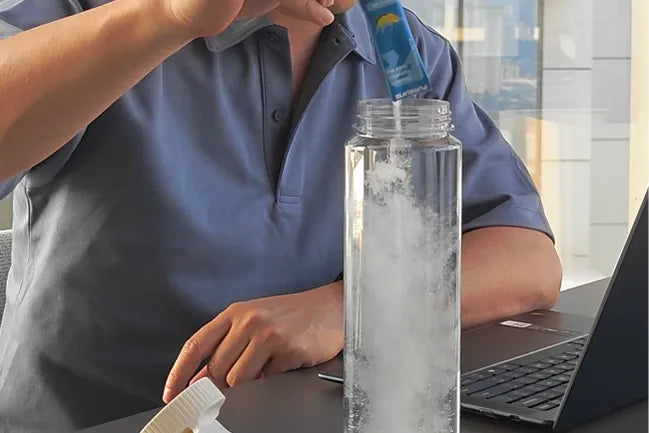
Electrolytes are minerals that regulate how water moves through the body and are lost in significant amounts through sweat.
What electrolytes actually do, why you lose them in sweat, and why water alone isn’t enough.
TL;DR
If you sweat, you lose electrolytes.
If you don’t replace them, hydration breaks down — no matter how much water you drink.
What are electrolytes?
Electrolytes are minerals that carry an electrical charge when dissolved in water.
They are essential for basic human function.
In the context of hydration, electrolytes control:
-
How water is absorbed in the gut
-
How fluid is distributed between blood and cells
-
How nerves signal and muscles contract
The four electrolytes most relevant to hydration are:
-
Sodium
-
Potassium
-
Magnesium
-
Calcium
Hydration is not just about fluid intake.
It depends on having the right electrolytes available for water to do its job.
Why sweating changes hydration

Electrolytes are lost through sweat and are required for the body to absorb, retain and use water effectively.
Sweat is not just water.
When you sweat, your body loses electrolytes along with fluid — particularly sodium, but also potassium, magnesium and calcium. These losses are not trivial, especially during prolonged exercise, hot conditions or repeated bouts of sweating.
This is why people often:
-
Drink large amounts of water
-
Still feel fatigued, foggy or flat
-
Continue to cramp or struggle with recovery
Once electrolytes are lost, hydration is no longer just about replacing fluid — it becomes a problem of electrolyte balance.
Further reading:
The electrolytes lost when you sweat
Why water alone isn’t enough after sweating
Water replaces volume, but electrolytes determine whether that water is retained and used effectively.
Without adequate electrolytes:
-
Water absorption in the gut is less efficient
-
Blood volume is harder to maintain
-
Excess water is excreted more quickly
In this state, drinking more water does not fix hydration.
It can sometimes make symptoms worse by further diluting electrolytes.
This is why hydration after sweating requires electrolytes, not just water.
Further reading:
Why water alone isn’t enough for hydration after sweating
Why many hydration drinks fall short
Many hydration and sports drinks are formulated around:
- Sugar for taste and perceived energy
- Low electrolyte levels to appeal to a broad audience
- Incomplete replacement of sweat losses
While these products may taste pleasant or provide short-term energy, they often fail to address the underlying issue: replacing the electrolytes actually lost in sweat.
Sugar is not required for effective hydration when electrolytes are properly formulated. In some cases, it can interfere with tolerance, gut comfort or hydration goals.
Further reading:
Why sugar isn’t required for effective hydration
What proper electrolyte replacement actually means
Effective electrolyte replacement means restoring the major electrolytes lost through sweat in amounts that matter.
This involves:
-
Replacing more than just sodium
-
Including potassium, magnesium and calcium
-
Using concentrations designed for real sweat loss, not flavour or marketing trends
-
Avoiding unnecessary ingredients that do not contribute to hydration
The goal is not stimulation or sweetness.
The goal is restoring the conditions that allow the body to retain and use fluid properly.
Who electrolyte replacement matters for
Electrolyte loss is not limited to elite athletes.
It commonly occurs during:
-
Exercise and sport
-
Physical work in hot or humid environments
-
Fasting or low-carbohydrate diets
-
Repeated sweating or high physiological stress
If you sweat and still feel under-hydrated despite drinking water, electrolyte loss is often the missing piece.
Further reading:
How electrolytes support hydration during fasting
The role of electrolytes in sport performance
How electrolyte imbalance contributes to cramping and fatigue
Where Purelyte fits
Purelyte is built around the principles outlined above.
It is designed to:
-
Replace the electrolytes lost through sweat
-
Focus on sodium, potassium, magnesium and calcium
-
Avoid sugar, fillers and unnecessary additives
Rather than masking dehydration with flavour or energy, Purelyte applies electrolyte science directly to hydration.
Further reading:
How Purelyte is formulated to replace sweat electrolytes
Explore further
If you want to go deeper, explore the supporting science and application:
-
What electrolytes you lose when you sweat
-
Why water alone isn’t enough for hydration
-
How electrolytes support fasting, performance and recovery
-
How Purelyte works in practice
Further reading:
Purelyte electrolyte drink
References
- Convertino, V. A., Armstrong, L. E., Coyle, E. F., Mack, G. W., Sawka, M. N., Senay, L. C. Jr., & Sherman, W. M. (1996). Exercise and Fluid Replacement. Medicine & Science in Sports & Exercise, 28(1), i-vii.
- Von Duvillard, S. P., Braun, W. A., Markofski, M., Beneke, R., & Leithäuser, R. (2004). Fluids and Hydration in Prolonged Endurance Performance. Nutrition, 20(7-8), 651-6.
- Maughan, R. J., Leiper, J. B., & Shirreffs, S. M. (1997). Recovery from Prolonged Exercise: Restoration of Water and Electrolyte Balance. Journal of Sports Sciences, 15(3), 297-303.
Share:
Why Sugar Isn’t Required for Effective Hydration