
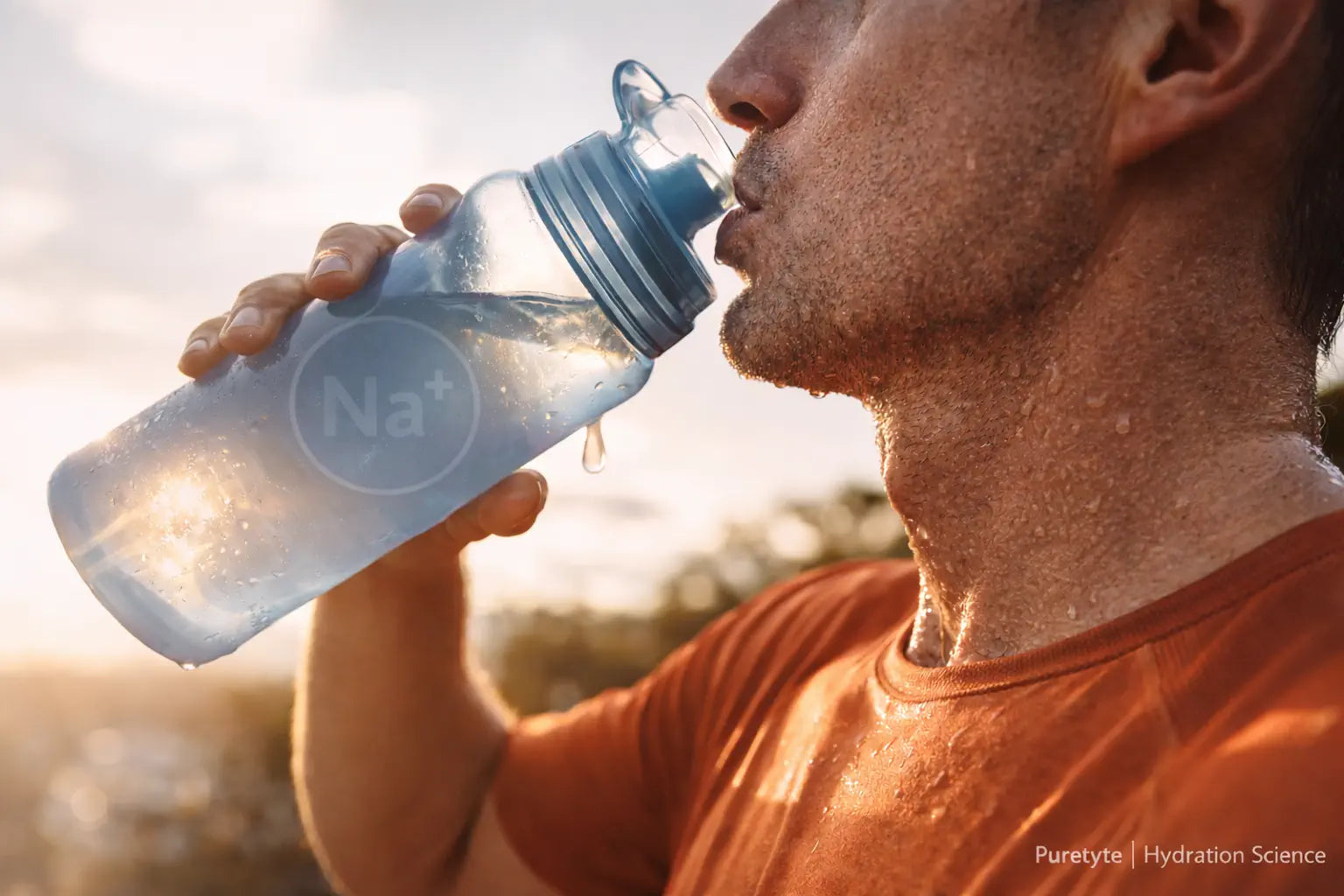
Why is sodium essential for hydration?
Sodium is the primary electrolyte lost in sweat and is essential for hydration because it regulates fluid balance, enables water absorption, and prevents excessive urination. When you sweat, you lose approximately 800mg sodium per liter along with potassium, magnesium, and calcium. Water alone cannot restore fluid balance when electrolytes are lost through sweat—effective hydration requires replacing electrolytes at sweat-loss levels, not trace amounts.
TL;DR
- Sodium is the primary electrolyte lost in sweat and governs fluid retention
- Water alone increases urine output after sweating
- Effective hydration requires electrolyte replacement proportional to sweat loss
- Most people lose ~800mg sodium per liter of sweat
- Hydration needs depend on sweat, not exercise duration or athlete status
What Sodium Actually Does in Your Body
Here's the thing about sodium: it's not just about salt shakers and blood pressure warnings. Sodium is the master regulator of where water goes in your body—maintaining the fluid balance between your bloodstream and cells through osmosis. This keeps blood volume stable so oxygen reaches your muscles and organs when you're moving, working, or training.
Sodium ions also generate the electrical signals that make everything work. They rapidly enter cells to trigger nerve impulses and muscle contractions—from your brain firing commands to your biceps contracting to your heartbeat staying steady. When blood sodium drops too low (hyponatraemia), this entire system falters, causing cramps, fatigue, headaches, or worse.
Why Sweating Depletes Sodium Fast
Sweat isn't just water—it contains electrolytes, led by sodium and chloride. Your body uses sweating for thermoregulation, which means losses ramp up dramatically in heat, during exercise, or during physical labor. Heat-acclimatized workers lose less sodium per liter than those who aren't acclimatized, but total sodium loss still rises with sweat volume—often 1-2 liters per hour in Australian summer conditions.
Several factors amplify sodium loss:
- Endurance exercise: Long training sessions or competitions
- Heat and humidity: Tradie shifts in hot conditions
- Fasting or low-carb diets: Lower insulin levels increase kidney sodium excretion
Research on heat-exposed workers and athletes shows average sweat losses of approximately 800mg sodium, 250mg potassium, 36mg magnesium, and 20mg calcium per liter of sweat. A 1.5-liter sweat day—common for tradies or athletes—means roughly 1,200mg sodium lost on top of daily needs. Left unreplaced, this impairs recovery and performance.
Why Water Alone Falls Short
When you drink plain water after sweating, it dilutes your blood sodium concentration. This lowers blood osmolality, which signals your kidneys to excrete the excess fluid as urine—defeating the whole point of drinking in the first place. Studies confirm that fluids containing sodium reduce urine output by 20-50% compared to water alone after exercise.
This dilution effect can even increase the risk of exercise-associated hyponatraemia during long, sweaty efforts combined with high plain-water intake. This explains why you might experience persistent thirst, bloating, or cramps despite drinking plenty. Sodium signals your kidneys to retain water where it's actually needed: in your bloodstream and muscles.
For a full explanation of why plain water fails to hydrate after sweating, see Why Water Alone Isn’t Enough.

What Your Body Actually Loses in Sweat
Research on heat-exposed workers and athletes provides clear averages per liter of sweat, though individual losses vary based on acclimatization, genetics, and sweat rate:
Average electrolyte losses per liter of sweat:
- Sodium: 800mg
- Potassium: 250mg
- Magnesium: 36mg
- Calcium: 20mg
These aren't arbitrary numbers—they come from occupational and sports science studies measuring actual sweat composition across different populations and conditions.
Common Sodium Myths Debunked
"Salt is always bad for you"
Chronic excess sodium from processed foods does raise blood pressure risks in susceptible individuals. But acute sodium replacement after sweating is physiologically different for active people. Context matters—health organizations endorse targeted sodium use for those losing significant amounts through sweat.
"Electrolytes are only for elite athletes"
Tradies, people who fast, and parents managing kids' weekend sports lose comparable sodium in heat. Occupational health studies confirm hydration needs extend well beyond elite athletes—anyone sweating significantly needs proper electrolyte replacement.
"More sodium is always better"
The goal is matching your losses, not exceeding them. Over-replacement strains your kidneys and creates unnecessary load. Sports medicine guidelines advise replacement based on sweat rate and composition, not blanket excess.
Why Sodium Works Best With Other Electrolytes
Sodium drives fluid retention, but it doesn't work alone. Optimal hydration requires replacing all major electrolytes lost in sweat—sodium, potassium, magnesium, and calcium—not just sodium alone. Here's why each matters:
- Potassium: Balances sodium intracellularly for proper heart rhythm and muscle function
- Magnesium: Prevents cramps through its role in over 300 enzymatic reactions
- Calcium: Enables muscle contraction and supports bone health
Sweat composition data consistently shows you lose meaningful amounts of all four electrolytes, not just sodium with trace amounts of others.

When Sodium Replacement Actually Matters
Understanding when sodium replacement is genuinely beneficial—versus when plain water suffices—helps you hydrate effectively without over-complicating things. The key is recognizing that electrolyte depletion affects performance much earlier than traditionally thought.
You need sodium replacement when you're sweating enough to drink:
If you're sweating enough that you feel the need to drink during activity, that fluid should contain electrolytes from the start—regardless of planned duration. Here's why this matters:
- Absorption takes time: Fluid requires 20-40+ minutes to move from your mouth to your bloodstream. By the time you feel thirsty, you're already physiologically behind
- Performance decline starts early: Research shows performance decrements can occur at body mass losses as low as 1%—well before obvious dehydration symptoms appear
- Sodium enables absorption: Without sodium, water absorption and retention are significantly less efficient, meaning much of what you drink isn't reaching your bloodstream in a timely manner
Specific situations where electrolyte replacement becomes critical:
- Exercise or physical work in heat: Hot or humid conditions dramatically elevate sweat rate—some individuals training in Australian summer heat can lose several grams of sodium per day
- Extended fasting or low-carb diets: Lower insulin levels increase kidney sodium excretion, making electrolyte balance more critical even without intense activity
- High-intensity or repeated sessions: Interval training, competitive matches, or back-to-back training sessions compress substantial sweat losses into shorter time windows
- Physical labor: Construction work, nursing shifts, outdoor work—any job requiring sustained physical output in warm conditions
- Daily mental performance: Your brain requires adequate electrolytes for optimal function; even mild depletion can cause brain fog or reduced concentration
- Individual sweat characteristics: Some people have naturally higher sweat sodium concentrations (visible salt crusts on clothing, salty-tasting sweat) and experience earlier cramping if electrolytes aren't replaced
Plain water is sufficient when:
- You're sedentary in comfortable temperatures
- Activity is light and brief (casual walks, short errands under 30 minutes)
- You're not sweating noticeably
- Total sweat loss stays under approximately 0.5 liters
- You're eating regular balanced meals that provide dietary sodium
The outdated "60-90 minute threshold":
Traditional guidance suggesting electrolytes only matter after 60-90 minutes of exercise fails to account for three critical realities: absorption delays, sodium's role in fluid uptake, and early performance decline. The evidence-based answer is simpler: if you're sweating enough to drink during exercise, that fluid should contain electrolytes from the start.
The key distinction isn't about arbitrary time thresholds or being an "athlete"—it's about whether you're losing enough electrolytes through sweat to impair fluid absorption, muscle function, or mental clarity. On average, most people lose 800mg sodium per liter of sweat, plus meaningful amounts of potassium, magnesium, and calcium. Water alone cannot restore fluid balance when electrolytes are lost through sweat.
How Purelyte Addresses Sodium Replacement the Right Way
Based on the replacement standards outlined above, Purelyte is formulated to match what your body actually loses in sweat. The formula is designed to meet or exceed typical electrolyte losses seen per liter of sweat:
- Sodium matched to average sweat loss profiles
- Potassium, magnesium, and calcium at meaningful replacement levels
- Zero sugar (sodium absorption doesn't require it)
- No artificial colors, flavors, or unnecessary additives
This isn't about being "the best" or revolutionary—it's about meeting the replacement standard that sweat composition science defines, without the junk that undermines clean hydration.
Key Takeaways
- Sodium governs hydration through fluid balance, nerve signaling, and muscle function—average sweat losses are 800mg sodium per liter plus meaningful amounts of potassium, magnesium, and calcium
- Water alone cannot restore fluid balance when electrolytes are lost through sweat—it dilutes blood sodium and increases urination
- Effective hydration requires replacing electrolytes at sweat-loss levels, not trace amounts
- Replacement needs match your sweat losses during exercise, heat exposure, fasting, or physical labor—not daily low-sweat situations
- Optimal hydration requires all major electrolytes working together, not sodium alone
Frequently Asked Questions
Q: How much sodium do I actually lose when I sweat?
A: Most people lose approximately 800mg of sodium per liter of sweat, though individual rates vary based on heat acclimatization, genetics, and sweat rate. A typical training session producing 1.5 liters of sweat means roughly 1,200mg sodium lost.
Q: Can I just eat salty food instead of using electrolyte supplements?
A: Salty foods provide sodium but rarely include balanced amounts of potassium, magnesium, and calcium at the ratios you lose in sweat. They also come with calories and often take time to digest, making them impractical during or immediately after activity.
Q: Is sodium dangerous if I have high blood pressure?
A: Chronic excess sodium from processed foods can raise blood pressure in sensitive individuals. However, replacing sodium lost through active sweating is different from chronic dietary excess. If you have hypertension or heart conditions, discuss appropriate replacement strategies with your healthcare provider.
Q: Why do I still feel thirsty even after drinking lots of water?
A: Persistent thirst after drinking water often signals that you've diluted your blood sodium by drinking plain water without replacing lost electrolytes. This triggers continued thirst signals even though you're consuming fluids.
Q: Do I need electrolytes if I'm not an athlete?
A: Anyone losing significant sweat needs electrolyte replacement—tradies working in heat, people exercising recreationally, or those fasting while active. "Athlete" is just a label; physiological needs are determined by sweat volume and composition, not fitness level.
Q: What about Himalayan pink salt, Celtic salt, or sea salt for hydration?
A: Adding Himalayan pink salt, Celtic salt, or sea salt to water provides sodium and chloride, which can support hydration better than plain water alone after sweating. These salts also contain trace minerals, but the amounts of potassium, magnesium, and calcium are nutritionally insignificant compared to typical sweat losses.
It’s important to understand that all naturally harvested salts — including Himalayan pink salt, Celtic salt, and sea salt — can contain detectable amounts of heavy metals, depending on their source and environmental exposure. The presence and levels vary by region and batch, which is why testing and quality control are critical.
Purelyte uses Himalayan pink salt and tests every batch to ensure it meets Australia’s strict safety standards for metal contaminants. For effective and safe rehydration, replacing all major electrolytes lost in sweat — sodium, potassium, magnesium, and calcium — at meaningful levels is more reliable than using salt alone.
Q: Can you have too much sodium from electrolyte drinks?
A: Yes — the goal of electrolyte use is to replace what you lose in sweat, not to exceed it. Potassium helps regulate sodium balance by working with the kidneys to increase sodium excretion and maintain proper fluid distribution, but it does not cancel out excessive sodium intake.
Consuming sodium well beyond what you lose in sweat can contribute to excessive total sodium intake, which may place unnecessary strain on the kidneys over time and provides no additional hydration benefit. Properly formulated electrolyte drinks are designed to support sweat replacement when used as directed.
Research Sources
- Bates GP, Miller VS. Sweat rate and sodium loss during work in the heat. J Occup Med Toxicol. 2008;3:4.
- Nielsen FH, Lukaski HC. Update on the relationship between magnesium and exercise. Magnes Res. 2006;19(3):180-189.
- American College of Sports Medicine. Exercise and Fluid Replacement. Med Sci Sports Exerc. 2007;39(2):377-390.
- Sawka MN, et al. American College of Sports Medicine position stand: Exercise and fluid replacement. Med Sci Sports Exerc. 2007;39(2):377-390.
- Maughan RJ, Shirreffs SM. Dehydration and rehydration in competitive sport. Scand J Med Sci Sports. 2010;20 Suppl 3:40-47.
Share:
Potassium, Magnesium & Calcium: Why They Matter for Hydration